Does LEGO Home Decor Actually Look Good? An Honest Take
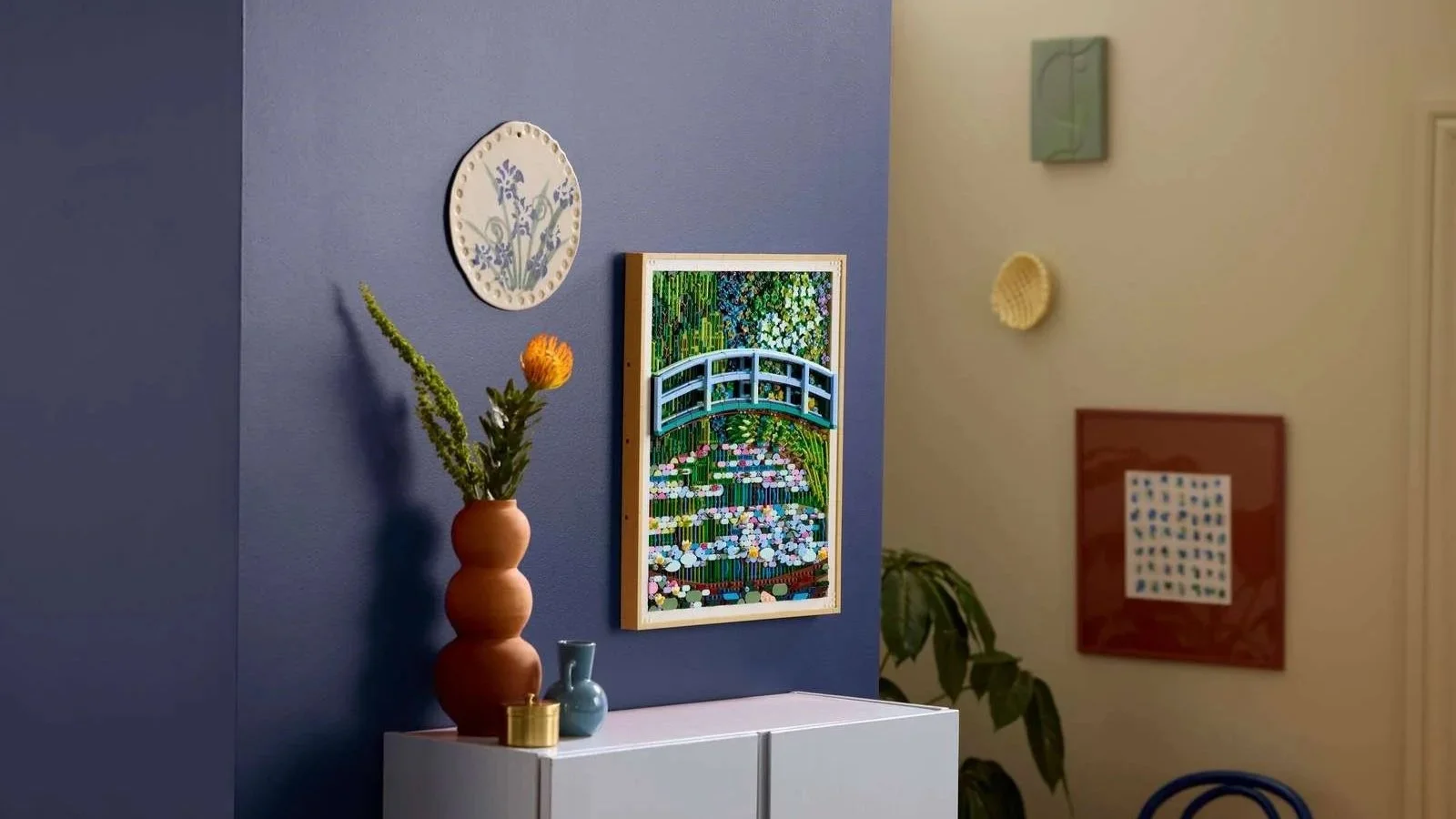
The short answer is yes – but not because you're supposed to find plastic bricks charming by default. The longer answer involves color theory, formal design training, museum curators, and a Monet painting from 1899 that hangs in The Metropolitan Museum of Art.
If you're buying a gift for someone who cares about their home, the question isn't really whether the LEGO Group makes toys. It's whether the right LEGO home decor can look like it belongs somewhere considered. It can. Here's why that's not a stretch.
The Case for LEGO Home Decor Starts With the Designers
Most people assume the LEGO Group's design priorities stop at the building experience. They don't.
The company employs trained industrial and product designers, many of whom studied color, proportion, and material science before they ever touched a brick. For the home-facing lines – Architecture, Art, and the larger display sets – the process looks closer to a product design studio than a toy company. Palettes are chosen deliberately. Scale gets tested against how a finished piece reads from across a room, not just in close-up photography.
Every brick shade in the catalog has an official name and a fixed specification, which means the palette of a display set is a decision, not an accident. The muted tones running through the Architecture line didn't land there by chance. Neither did the colors in the Art sets, which are matched to the source artwork as closely as the available brick range allows.
What gives all of that real credibility is who checks the work. Not trend consultants – actual curators. The wall-mounted Art series has been developed with respected cultural institutions, and the newest set was built alongside The Metropolitan Museum of Art itself.
That's less a marketing strategy and more a signal of intent.
The LEGO Claude Monet – Bridge over a Pond of Water Lilies Set: Proof You Can Hang
$249.99 | 3,179 pieces | Set No. 31220
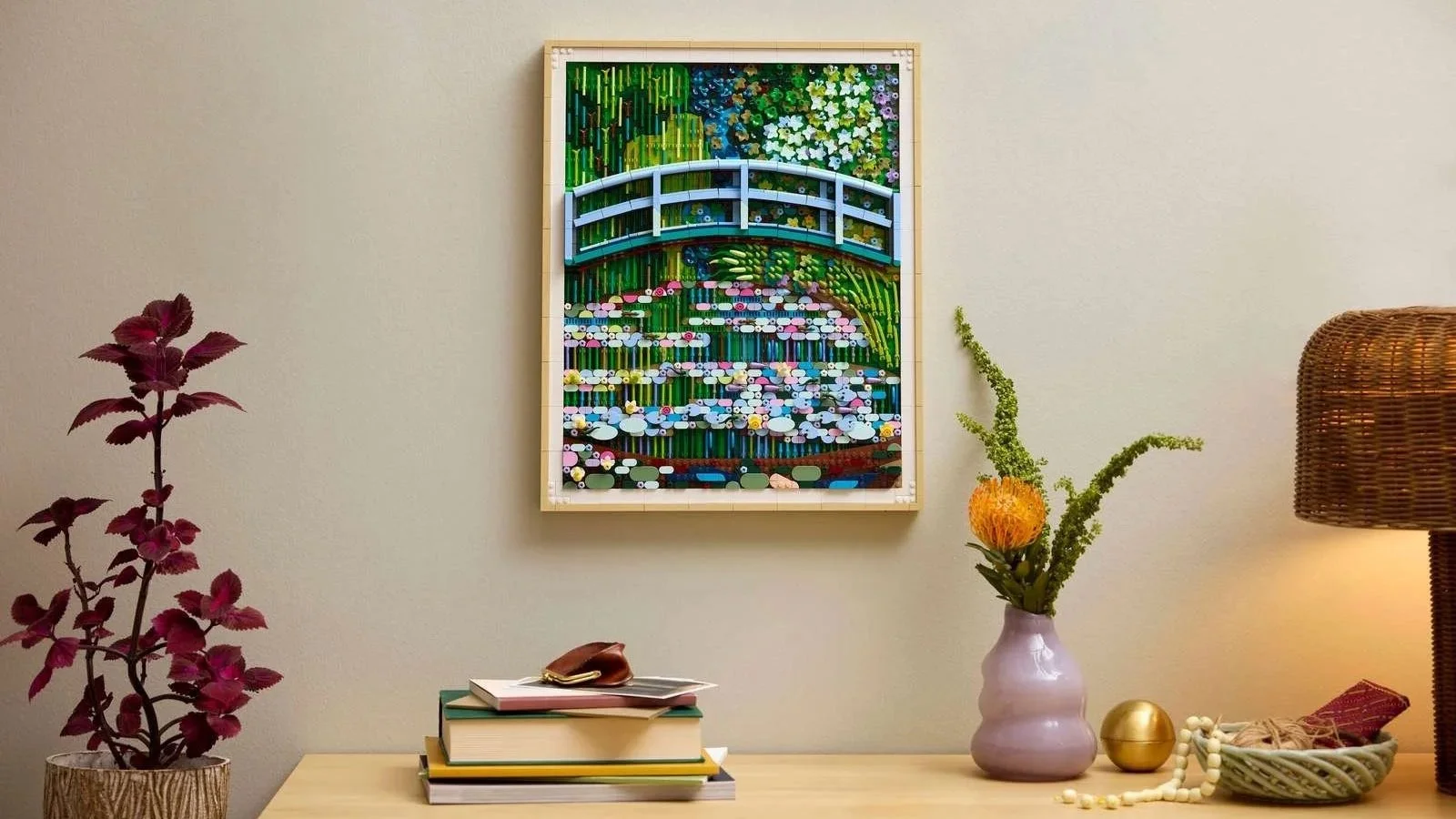
The Monet set is about as clear an example of that intent in action as the LEGO Group has produced.
This is a wall-mounted mosaic built brick by brick, then hung like a canvas. It recreates Monet's 1899 painting of the Japanese footbridge over the lily pond at his garden in Giverny – the version that hangs at The Met, whose curators worked on this set directly. The finished piece measures about 20 inches tall, 16 inches wide, and only 1.5 inches deep. From a normal viewing distance it reads convincingly as a painting. Step closer and it dissolves into thousands of small elements layered at different depths, a physical surface built to imitate brushwork. That dual life is deliberate – Monet's later work behaves the same way, resolving at a distance and fragmenting up close – and it makes the piece more interesting to live with than a flat print would be.
That detail matters more than it sounds. The designer, Stijn Oom, has explained that Monet painted from light and feeling rather than crisp outlines, so a flat mosaic of square tiles was never going to capture it. Instead, the trees and their reflections in the water are built from slim bar pieces with deliberate gaps between them, spaced so they read as brushstrokes rather than rows.
The palette lands in soft greens, muted blues, and aquatic mid-tones – closer to a Scandinavian watercolor print than anything most people picture when they picture LEGO bricks. Look at the finished piece without context and you'd reach for "botanical print" long before "plastic."
Then there's the quiet wit in the parts themselves. Some of the larger lily pads are the tiny paint palettes that LEGO figures hold. Several water lilies have a small frog built into them. Sword pieces angle through the vegetation as a nod to Monet's love of Japanese art, and cherries, bananas, and butterflies hide in the foliage. None of your guests will spot any of this. Most will still like what they're looking at.
The build itself runs several relaxed evenings, and the instructions include a QR code linking to a short podcast about Monet, recorded with a curator from The Met. A thoughtful touch for a recipient who's more art person than toy person – which is exactly who this set is for. The hanging mechanism is built into the back, so there's no separate hardware and no guesswork.
Now the honest part. At $249.99, this is expensive for wall art. You can frame a decent print for under $50, and the print doesn't ask for several evenings of your time first. What the money buys is the build itself – which is, for a lot of people, exactly the point – and something genuinely singular on the other side of it. Very few homes have a brick-built Monet on the wall.
Whether that justifies $250 depends entirely on who you're buying for. For someone who takes art seriously, or who pays real attention to how their home looks, this is a very specific kind of right answer.
If You're Still Deciding
The Monet set is the flagship case, but it's one piece in a larger room. The Architecture line turns skylines and famous buildings into clean, minimal shelf pieces in tones that suit almost any interior, and the Art series covers Van Gogh, a Japanese botanical landscape, and more – at several sizes and prices.
Ready to See for Yourself
Convinced, or at least willing to look? LEGO Wall Art and Architecture Sets That Pass as Real Decor gathers the strongest evidence in one place, and LEGO Sets for Adults: Are the Art and Architecture Lines Worth It? weighs what the two flagship display lines cost against what they deliver.
From there it depends on the room and the person – Best LEGO Sets to Display in a Living Room, Not a Toy Box for the main event, LEGO Skyline Sets: A Gift for Someone Who Loves to Travel for the one who keeps a packed suitcase.