How LEGO Piece Count Affects Difficulty, Time, and Size
Two boxes, same shelf, same fifty dollars. One says 608 pieces, the other says 1,073. If you don't build, the LEGO piece count is the strangest number in the store – it clearly means something, but nobody tells you what.
Here's the short version. The piece count is a decent clock, a mediocre difficulty rating, and a genuinely terrible tape measure. This post covers what the number can tell you about build time, how hard a set will actually be, and how big it ends up – and the moments when you should ignore it completely.
What a LEGO Piece Count Really Measures: Time
Of everything printed on the box, the piece count tracks one thing reliably: hours. More pieces, more evenings. Not perfectly – some sets build faster per piece than others – but as a rough clock, it works.
The LEGO Orchid is a useful yardstick. At $49.99 and 608 pieces, it fills an evening or two of unhurried building. Scale from there. A few hundred pieces is one relaxed sitting. Around a thousand is a weekend of sessions. Several thousand turns into a project measured in weeks of evenings, and the five-figure monsters run 20 to 30 hours even for people who build often.
Now the part that changes how you shop: for an adult, the hours are not a downside. Fifty dollars for three hours of anything sounds steep until you remember the point of these sets is the sitting-down-and-doing-it part. A bigger count means the gift lasts longer. Buy the build time, not the plastic.
Why 11,695 Pieces Can Be Easier Than 900
Piece count measures quantity. It says nothing about complexity, and the gap between the two gets comical at the extremes.
The World Map, a LEGO wall-art set, carries one of the highest piece counts ever printed on a box: 11,695. More than 10,000 of those pieces are tiny round dots, placed one at a time, row after row. Nothing about it is hard. The real challenge is not losing your place, which makes it closer to a giant cross-stitch pattern than an engineering feat.
Flip it around and the same rule holds. Technic sets – the LEGO line built around gears, pistons, and working suspension – can be genuinely tricky at 900 pieces, because every step has to mesh with the last one. A wrong gear on page 12 surfaces as a mystery on page 40.
So if you're worried a set will be too hard for a first-timer, the count won't warn you. The picture will. Flowers, mosaics, and buildings forgive mistakes; anything with a working mechanism keeps score.
And don't read the 18+ in the corner as a skill rating either. It marks who the set was designed for, not how hard it is – some of the gentlest builds the LEGO Group makes wear that badge.
The Number Is a Terrible Tape Measure
Here's the piece count's biggest lie: it says almost nothing about how much space the finished model takes up.
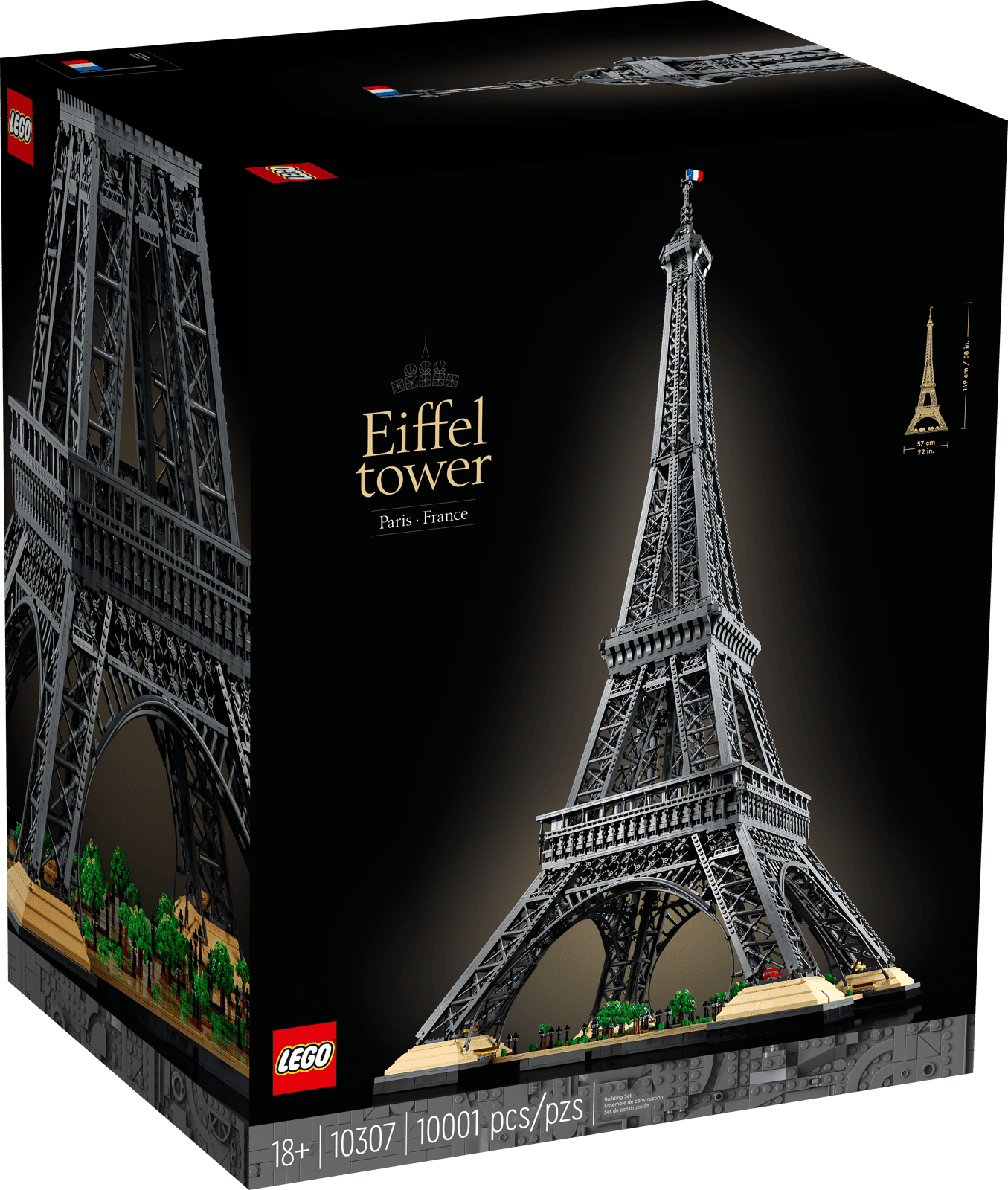
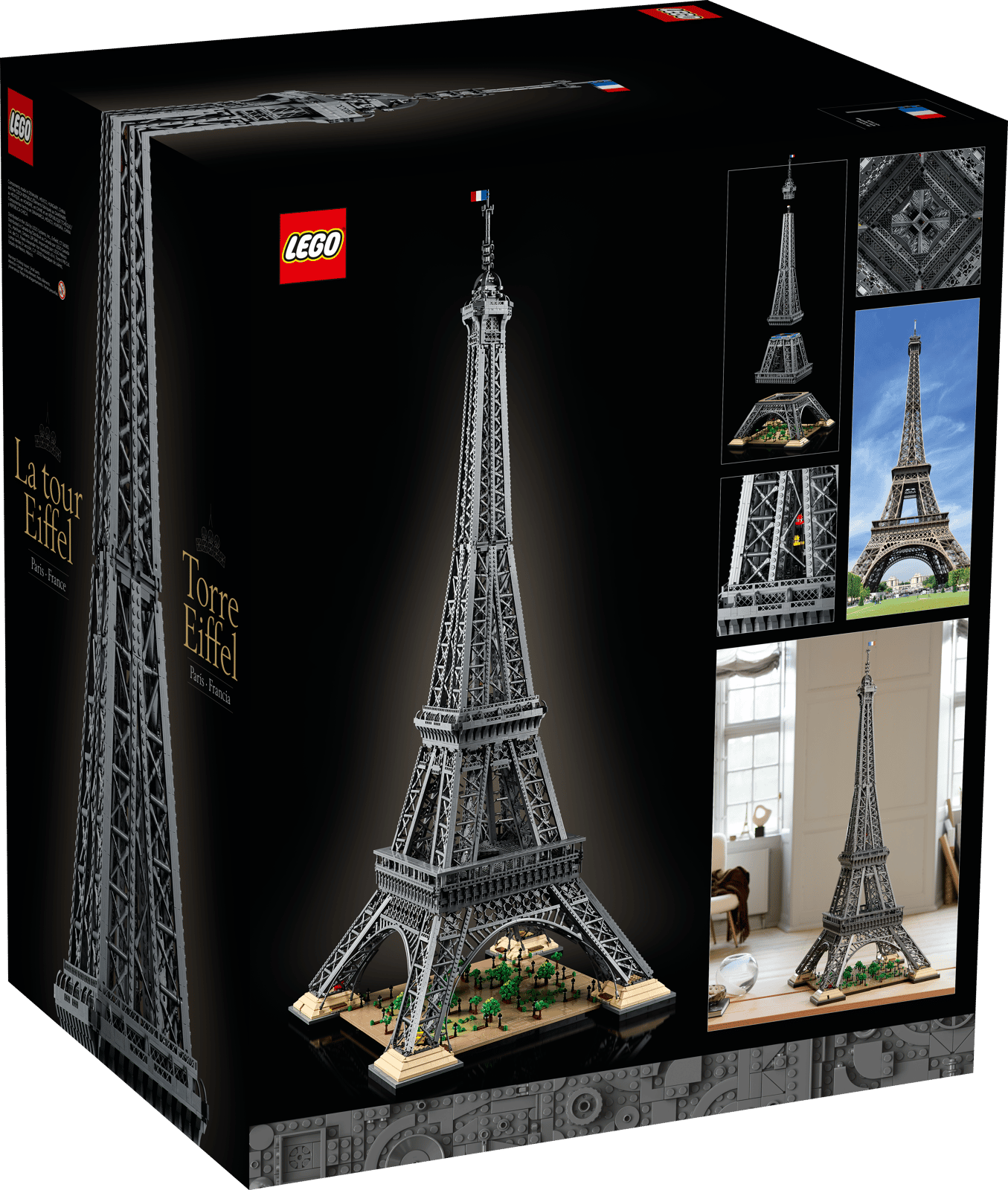
Those 11,695 World Map pieces? They hang flat on a wall, in a frame over three feet wide but barely deeper than a picture frame. Meanwhile the LEGO Eiffel Tower uses a comparable count – 10,001 pieces – and stands almost five feet tall. That one isn't decor. It's furniture, and it needs a floor plan.
The difference comes down to what the pieces are. Thousands of tiny tiles pack dense and flat. Big structural pieces sprawl. A 600-piece flower bouquet fits in a vase; a 600-piece race car can swallow half a shelf.
The good news is that you never have to guess. The finished model's dimensions are printed on the box, usually on the side or back in small type. Measure the shelf you have in mind, then check that line. It beats the piece count at this job every single time.
How to Use the Number in the Gift Aisle
A working shorthand, then. Under 500 pieces is a safe first gift – an evening of fun, no commitment, no risk of the box glaring from a closet. The 500 to 1,500 range is the sweet spot for most adults: enough hours to feel like a real project, done inside a week of evenings.
Past 3,000, only buy if you already know they want a project, because at that scale the set becomes a hobby with a start date.
One warning about the math your brain will want to do. Dividing price by pieces feels like smart comparison shopping, and by that logic the World Map would be the best deal the LEGO Group ever offered. It isn't. Ten thousand of its pieces are dots the size of a lentil, and cost per piece rewards tiny pieces without saying anything about what shows up in the box.
Whatever the count promises, let the printed dimensions make the final call on where the thing will live.
One Number Down
The piece count is the loudest number on the box, but it's not the only one talking. Decoding the Box: How to Read a LEGO Set Like a Pro walks through everything else printed on that cardboard, and LEGO Minifigures Explained (and Why the Box Highlights Them) covers the tiny plastic people in detail.
Still deciding between two boxes? What LEGO Themes Mean for a Non-Fanatic decodes the logo in the corner, and How to Spot Display-Ready LEGO Sets From the Box Alone settles whether the finished build earns shelf space.